

Encore Records Ltd
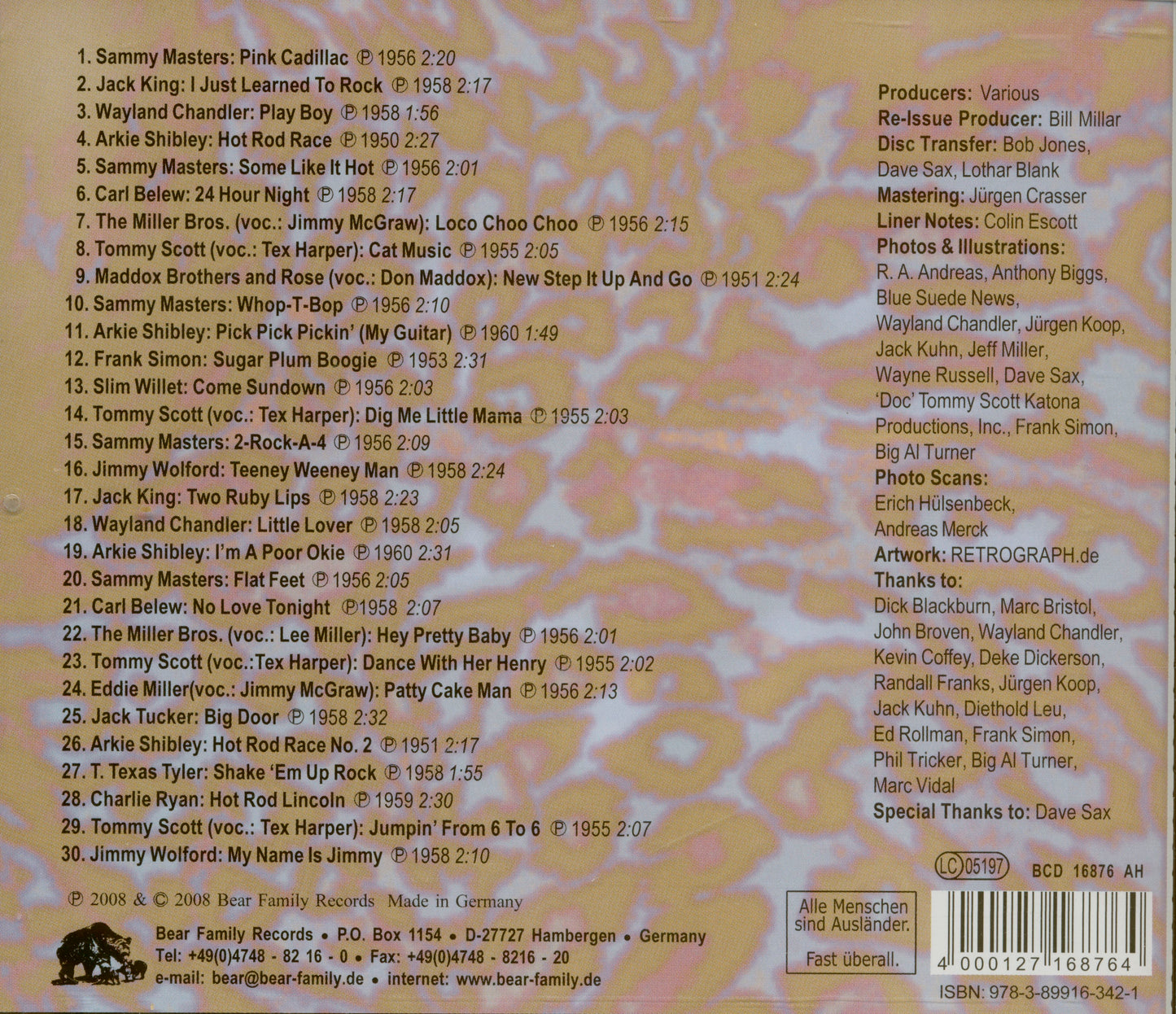
USED CD - That'll Flat ... Git It! Vol. 26: Rockabilly From The Vaults Of 4 Star Records
USED CD - That'll Flat ... Git It! Vol. 26: Rockabilly From The Vaults Of 4 Star Records
Couldn't load pickup availability
1CD - USED - Like New - Jewel Box - Import on Bear Family Records
There is no post-War record business saga as convoluted as that of 4 Star Records. The most important west coast-based independent label of the 1940s, it could have been an industry powerhouse if its longtime owner, Bill McCall, treated his songwriters and artists as anything but indentured serfs. The label was launched by Richard A. 'Dick' Nelson in August 1945 as a subsidiary of his Gilt-Edge Records, itself launched in 1944. 'Four Star' was an unlikely name because it denoted something less than five stars, which usually meant top-of-the-line. Nelson had scored a huge hit with Cecil Gant's R&B hit I Wonder , but he'd run into problems by the time he recruited William A. 'Bill' McCall as a major investor or purchaser. McCall reportedly stumped up $5000. Margaret Jones' biography of Patsy Cline described McCall as a short, dapper Texan with squinty eyes and a penchant for headwear like berets and Stetsons. He had been a miner in Nevada, supplying fluorspar and other minerals to record manufacturers. At some point, he started a milling plant in Los Angeles, and, with shellac and other ingredients used in record manufacture in short supply, he advertised for records that he could regrind. He supplied his compound (containing as little shellac as possible) to Gilt Edge and other plants before buying a stake in Gilt-Edge/4 Star.
When McCall bought Gilt-Edge/4 Star in 1946, the label was run on a day-to-day basis by Cliff McDonald and Don Pierce, and focused on Hispanic releases. “When Bill came in, we had about forty or fifty creditors and no money to pay them,” Pierce told John Broven. “They were calling me on the phone, and I was about to have a nervous breakdown trying to get them paid or stalled off. Bill took that off me and let me go off and handle sales and production.” McCall bullied his creditors into accepting pennies on the dollar, even though 4 Star was an ongoing operation. The business was based at 500 N. Western Ave. in Los Angeles, then on Larchmont Avenue in Pasadena, and finally on 305 South Fair Oaks Avenue in Pasadena. A mini-feature on 4 Star in Billboard (1946) said, “Should Four Star record sales drop, which they show no sign of doing, the company can always turn to its own milling plant for rejuvenated profit. Operating its own factory, the diskery makes stampers for many other labels than its own, and from these combined activities entered a gross sales mark for '45 of $1,500,000.” McCall and Nelson were absent from the list of officers of the company cited in the feature. Those listed were G. C. McDonald, president; H. J. Scribner, vice-president; Jerry Rolston, secretary; and Don Pierce, treasurer. By this point, the company seemed to be concentrating on its new pop and jazz signings, none of whom amounted to anything.
Share